Myofascial Release: The Power of Elastic Recoil
Myofascial release exercises can promote fuller range of motion for your breathing anatomy and promote ease and efficiency for your breath support system.


This article was first published in the November/December issue of VOICEPrints, the journal of the New York Singing Teachers Association. It is the second in a four-part series on how to use myofascial release techniques to condition vocal anatomy.
Be the Balloon
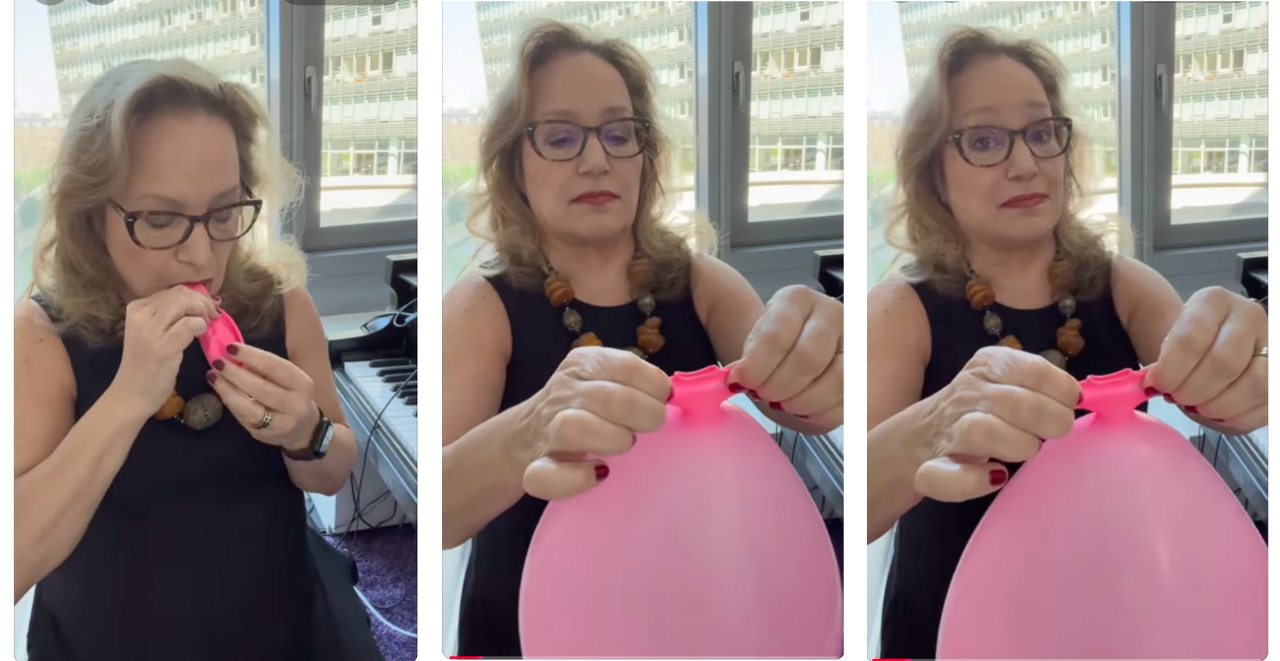
Here is a short video I made to demonstrate how the Bernoulli Principle applies in singing. In this spectacularly unsophisticated demonstration, you will see me blow up a balloon, laterally stretch the opening, and produce a loud, sustained wheeze as air escapes from the balloon and vibrates the edges of the aperture.
This column more or less unpacks what there is to be learned from the physics of a sustained balloon wheeze. I encourage you to watch the video and/or run your own experiment with a balloon prior to reading what follows, as it provides a practical, tangible context for the way our fascia participates in breath support for singing.
I keep a bag of balloons on my piano so that I can readily demonstrate for my students how simple and effortless breath support can actually be, if they can train their bodies to behave more like the balloon. Our tissues have the potential to expand and stretch more globally on inhalation, similar to the rubber of the balloon. A well-coordinated inhalation imbues the expanding tissues with energy potential and raises the level of our subglottal breath pressure, preparing our bodies to phonate just as the internal pressure of the full balloon prepares it to wheeze. The balloon makes a lot of noise without anything pushing on it, because the expanded rubber provides all the pressure needed to vibrate the aperture.
Not only are the pleural sacs in which our lungs are housed composed almost entirely of fascia, but the global sense of expansion we feel throughout our torsos reflects the stretching of our fascial tissues in all directions. When we inhale deeply, we infuse these expanding tissues with energy potential, just as blowing up a balloon globally infuses the stretching rubber with energy potential. When our lungs are full and our tissues are expanded, the air pressure inside our lungs is greater than the air pressure above our vocal folds. That is why when we exhale, we can produce vocal sound: comparatively high-pressure puffs of air escape from our bodies and vibrate the vocal folds.
When our breathing apparatus is free of excess tension and enjoys good range of motion, the internal breath pressure facilitated by a full, well-coordinated inhalation is sufficient to both initiate and sustain vocal sound, without deliberate muscular engagement. While muscular coordination and engagement can be an important part of breath support strategies, any muscular activity is most effective when it responds to what has already been set in motion by the elastic recoil of the fascia when the breath is released.
Many of our movements are initiated by the elastic recoil of fascia that has been stretched. We are less likely to notice how powerful this elastic recoil can be, because it is our muscle tissue, not the fascia that provides feedback about how much effort we are expending. The movement sequence involved in pitching a baseball offers a useful example of how powerful elastic recoil can be. In the linked video, you can see how pitcher Drew Storen’s wind-up maximally stretches his fascia all the way from his left foot to his right pitching arm and how the elastic recoil of the tissues powers up his pitch. His throw is also supported by the muscular strength of his legs, core, and arm—but without the wind-up, without that powerful elastic recoil, brute strength would not send the ball very far or very fast.
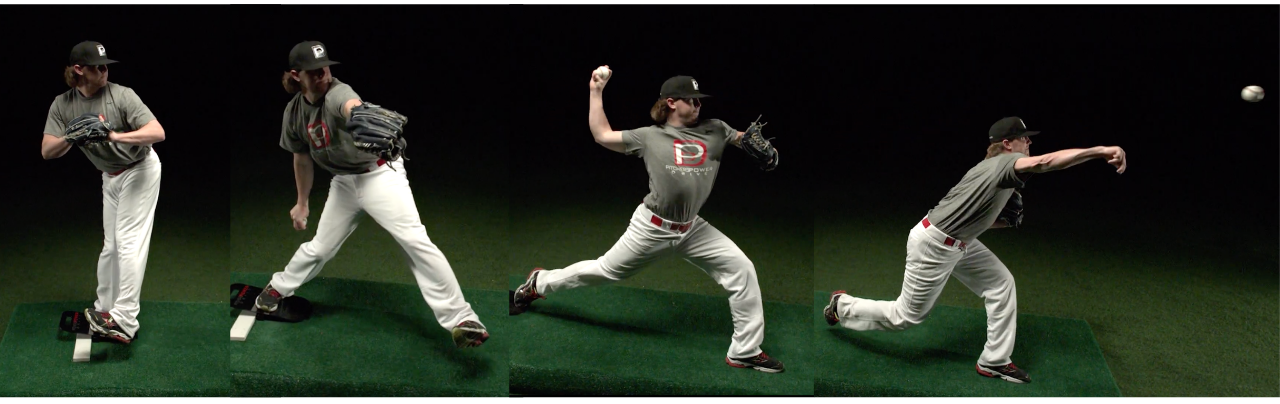
The elastic recoil of the fascia that is stretched on inhalation is similarly much more effective at generating optimal, sustainable subglottal breath pressure than deliberate engagement of the musculature. Whether you’re singing or playing baseball, muscular activity is most effective when it responds to a movement impulse catalyzed by intention and initiated by the fascia, after which the muscle tissue encased within the fascia engages and participates in the movement by contributing the level of force required to complete it.
Embrace the power of elastic recoil. Be the balloon!
Fascia: From Trash to Treasure
If you could remove every piece of tissue from the body that was NOT fascia, you would have a perfect 3D model of the body, including bones, muscles, organs and vessels… the fact that fascia is everywhere is one of the very reasons that it was overlooked for so long. In dissections of the human body, most of it was cleanly removed and thrown away so that the cadaver would more closely resemble pictures in anatomy textbooks,
— Fascia, What Is It?
We have been dissecting cadavers for more than 500 years, in order to better map and understand human anatomy and physiology. This has yielded extraordinarily detailed information about the structure and function of our skeletal and muscular systems, as well as our organs. However, we have only very recently begun to study and codify fascial structures! Prior to the First International Fascia Research Congress in 2007, fascia was essentially regarded as trash, wholesale ignored and discarded during cadaver dissections. Given that scientists and doctors are only now studying the role of fascia in movement and internal communication, it is unsurprising that fitness trainers and voice teachers are only now beginning to appreciate the benefits of conditioning and training the fascia.
As it turns out, fascia is not merely the internal equivalent of plastic wrap that keeps all of our anatomical components in place, but rather a complex, multifunctional sensory organ that facilitates communication, sensory awareness, and muscular activity throughout the body. When we sing, musician and instrument are seamlessly integrated within the fascial network. Our imaginations are literally hardwired into the anatomical components of our instruments. The components themselves communicate with one another via the fascial network in which they are all encased. The vocal instrument is a self-contained system in which intention stretches and tunes the vocal folds to a desired pitch, the breath responds with the level of breath pressure necessary to vibrate them, and the resonators and articulators arrange themselves to perfectly amplify whatever vowel we wish to sustain.
While singer and instrument form a seamlessly integrated system, it is useful to explore and condition the instrument’s anatomical components that serve as generator, vibrator, and resonator for the vocal instrument. The breath plays the role of generator—it is the mechanism that stimulates the vibrator (our vocal folds) to vibrate. If we want to condition and coordinate our breathing anatomy to cultivate the best generator that we can, it is important to understand what makes for a good generator—what it is that we actually need our generator to accomplish.
As I demonstrated with the balloon, the way the breath generates vocal fold vibration is by exploiting the pressure differential below and above the vocal folds. The energy potential invested in our tissue as a consequence of inhalation compresses the air molecules inside our lungs, which can escape to an area of comparatively lower pressure via the aperture created at the glottis. The sound vibrations are created by the swift, repeated opening and closing of the vocal folds as the puffs of air escape. Our vocal folds demand varying degrees of pressure to make them vibrate on high pitches and low, loud pitches and soft, focused production and diffuse. Our vocal folds also need to be able to sustain vibration with reliable continuity over a desirable period of time while varying pitch, volume, and quality of production.
Therefore, an efficient generator for the vocal instrument is one that provides a stable, continuous airstream while effortlessly adjusting pressure levels in response to the demands of a musical phrase as it unfolds. A good generator is versatile, flexible, capable of continuity, and above all responsive. High notes, for example, feel cathartic and satisfying when they are motivated by expressive intent and supported by a responsive breath management system; they feel comparatively strained and/or effortful when they result from attempts to micromanage subglottal breath pressure via direct muscular manipulation.
That is why I encourage singers to be more like the balloon. When you expand globally and infuse your tissues with energy potential, you can release all of that potential and allow it to meet the expressive and musical requirements of vocal fold vibration. You will then likely find that your musculature reflexively engages to assist in sustaining and regulating subglottal breath pressure in order to complete the phrase. How the musculature engages depends on how your body functions and the specific breathing patterns you have habituated. I find that this part is unique to each singer, and I believe this explains why there are so many different schools of thought on breath support—if we look at what the musculature is doing to support the breath, it is likely to vary. What is common to all singers is the elastic recoil of the fascia on exhalation.
A full, well-coordinated inhalation infuses your tissues with energy potential in much the same way that the effort of drawing a bow string transfers strength from your arm and your body directly to the string. Releasing the string transfers the energy to the arrow, which can fly a great distance with great accuracy. If instead you used brute force to throw the arrow at something, you would be far less likely to hit your target. The energy potential you infuse into your tissues by inhaling is similarly superior to direct muscular activity where sustaining and supporting a vocal phrase is concerned.
Myofascial release exercises can promote fuller range of motion for your breathing anatomy, as well as a seamless sense of expansion for inhalation. They can significantly raise the level of energy potential you infuse into your tissues and help cultivate a responsive, well-coordinated generator for your vocal instrument.
Myofascial Release Exercises for Breathing Anatomy
Myofascial Release for the Abdomen
Because our abdominal muscles tend to be characteristically overactive, this area may be very sensitive until you become accustomed to the exercise. Go slow, perform the stretch mindfully, and stay within the “hurts so good” range of pressure that you would enjoy from a massage. In the video I am using a Coregeous Ball from TuneUp Fitness for both exercises.
- Kneel on a mat and position a squishy inflatable yoga ball between your sternum and your navel.
- Support yourself with your arms, with the ball between your sternum and your navel.
- Slowly lower yourself onto the ball with your legs extended and your weight supported by your hips and forearms.
- Maintain control over how much of your weight you are lowering onto the ball. Keep your neck relaxed and your head hanging down.
- Breathe slowly and deeply. With each exhalation, see if you can comfortably rest more of your weight on the ball.
- Repeat for a series of five or six breath cycles.
- Carefully return to a kneeling position and take a moment to continue breathing slowly and deeply, noticing any feedback you get from your abdominal tissues.
Myofascial Release for the Ribcage
- Position yourself face-up on a mat with your feet on the floor and your knees pointing up.
- Place a squishy inflatable yoga ball under your back just below and between your shoulder blades. Play with the position until it feels comfortable, with your ribcage lifted up and away from your pelvis. You may wish to place a book or a yoga block under your head, so your neck feels relaxed throughout the stretch.
- Breathe slowly and deeply in this position, seeing how far you can expand on inhalation.
- Exhale, and see if you can relax and sink lower onto the ball with each exhalation. Exhale as fully as you are able to without mobilizing your abs to push breath out.
- Repeat for a series of five or six breath cycles.
- Carefully return to a kneeling position and take a moment to continue breathing slowly and deeply, noticing any feedback you get from the tissues surrounding your ribcage.
Please see this video for demonstrations of both exercises (and another balloon demonstration #sorrynotsorry). The demonstration of the Myofascial Release for the Abdomen exercise begins around the 3:20 mark; the Myofascial Release for the Ribcage exercise begins around the 4:40 mark.
Function Over Form
The fitness question I have been asked most frequently over the years is “If I work out my abs, will it screw up my breath support?” This is the wrong question. The right question is, “How can I condition my breathing anatomy to create a more global sense of expansion and improve range of motion for inhalation?”
Strong abs need not come at the expense of full breathing. Your generator can even benefit from abdominal strength, just as Drew Storen’s pitching gets a big boost from the muscles in his legs, core, and arm. When Storen works out, he just needs to make sure that nothing he does to strengthen his musculature will compromise the flexibility he needs in order to generate a powerful elastic recoil when he throws the ball. Singers similarly need to cultivate functional strength for their breathing musculature while also promoting flexibility.
Developing abdominal strength can absolutely go hand in hand with creating a more global sense of expansion and improving range of motion for inhalation. The key is to pair abdominal and core strength training with regular stretching and myofascial release while monitoring your range of motion for breathing with the same attention you devote to counting your crunches and timing your planks. The issue here is simply our culture’s completely weird, unhealthy aesthetic obsession with flat stomachs. The imperative to hold in our stomachs only serves to make our abs tight and overactive without conferring any functional strength. This is among the reasons that singers can often find it so difficult to stop pushing—they’re so used to holding their bellies rigid all the time that the tensing becomes habitual. Pursuing the appearance of washboard abs as an end in itself rather than as a component of functional abdominal strength will indeed limit range of motion for inhalation.
Myofascial release tools can be incredibly helpful for releasing the overactive abdominal muscles that nearly all of us develop. Whatever your particular approach to teaching breath support, I encourage you to invite your students to release their abs and ribcages prior to vocalizing or doing breath work. The results are likely to amaze you.
Part 1 of this series offers an introduction to how to apply myofascial release strategies in voice lessons and practice. Part 3 offers myofascial release exercises for the anatomy involved in phonation. Part 4 features myofascial release exercises for the anatomy involved in resonance and articulation.